Mass adoption of electric vehicles is expected in the coming years, and this will be accompanied by an increase in demand for electricity worldwide. The question is: will we be able to meet this growing demand for electricity?
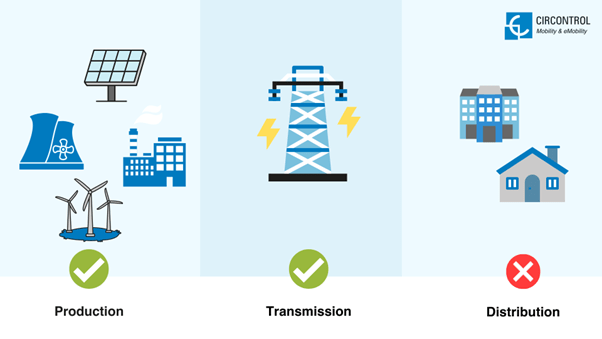
According to studies by experts in the field, the electricity generation capacity to charge the 140 million vehicles expected in Europe by 2030 should not pose any difficulty thanks to a mix of nuclear and renewable energies. The problem of electricity capacity arises at the distribution stage: the electricity grid cannot store energy and must adapt dynamically to demand.
Potential obstacles in local grids for fast and ultrafast charging
All predictions suggest that the majority of EV charging will continue to be on AC (domestic current for normal charging), but fast or ultrafast (DC) charging will continue to be needed for fleets, taxis and heavy duty vehicles.
It is rather this type of charging and the associated power that can cause problems for local low voltage grids (which, however, are still suitable for AC charging and DC fast charging).
To alleviate this problem, grid power can be increased or even demand can be decreased at specific times, while working towards a better distribution of electricity demand by vehicles throughout the day and in specific geographic areas.
Dynamic energy management to harmonise electrical demand for charging
This is an easy-to-manage system to prevent the main circuit fuses from shuting down, allowing the electric vehicle to be charged at a faster rate depending on the power available in the grid.
With this method, the charging of the electric vehicle is dynamically and automatically adapted to the available power. There are models and technologies for implementing dynamic energy management in home, at work, in fleets, in the hospitality sector, in public charging on the roads, etc.
In homes, a sensor must be installed in the electrical panel to obtain the energy of the house in real time. This sensor sends the signal to the electric vehicle charger and allows it to obtain the full charging power requested or to reduce it to acceptable limits for both the vehicle and the contracted power.
In the case of fleets and car parks, an electricity meter must be installed to read the total consumption at the facilities. The power differential (in kW) is allowed for EV charging. When the maximum allowed power is reached, the smart control reduces the EV charging power and thus avoids potential supply problems.
The DLM system is a software solution designed to manage the energy consumed by several charging points operating simultaneously. The system allows a greater number of electric vehicles to be charged more quickly and simultaneously by using the available energy more efficiently and distributing it evenly among the various chargers. It also makes it possible to increase the number of charging stations without necessarily increasing the contracted power.
It is therefore recommended to install the DLM system in places where the electrical installation is entirely dedicated to electric vehicles, or in places where another installation shares the maximum available power.
Both companies, part of the same business group, are combining synergies and resources to operate under a single global brand, enhancing the product portfolio and bringing it closer to customers Barcelona, 15 July 2026 – Circontrol, a leading company in electric vehicle charging solutions, is joining forces with Circutor, which specialises in energy efficiency and […]
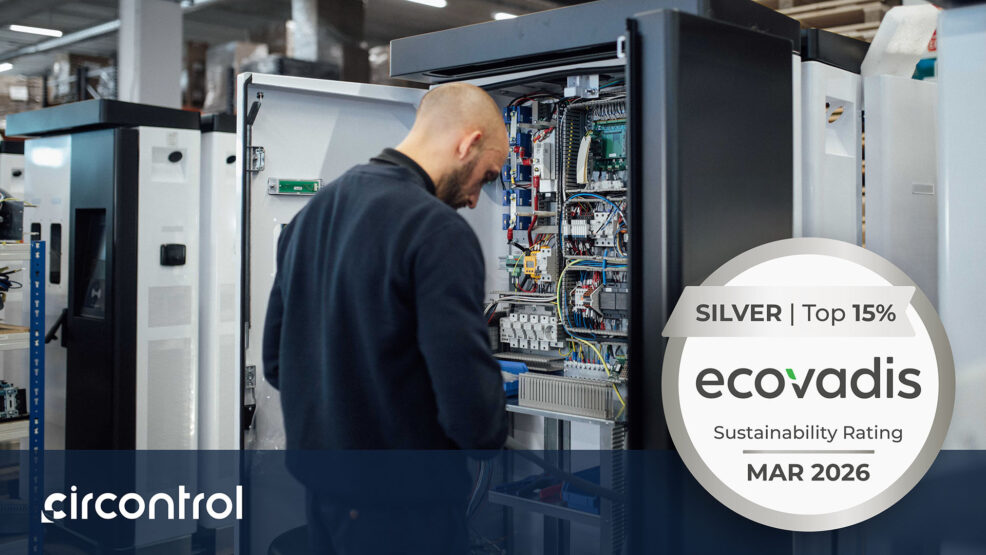
Circontrol has been awarded the EcoVadis Silver Medal, reaching the 90th percentile, a clear improvement compared to last year’s result. With this rating, Circontrol is now positioned among the top 10% of companies evaluated by EcoVadis worldwide. Within the electrical and electronic equipment manufacturing sector, the company ranks among the top 5%, and in the […]
Circontrol continues to enhance the future‑readiness of its EV charging portfolio with the introduction of a new retrofit kit for eVolve Gen4 chargers, enabling compliance with ISO 15118‑2 (hardware ready) and preparing the platform for ISO 15118‑20 via a future software update. Available now, this retrofit kit allows existing eVolve Gen4 installations to evolve towards next‑generation communication standards without […]